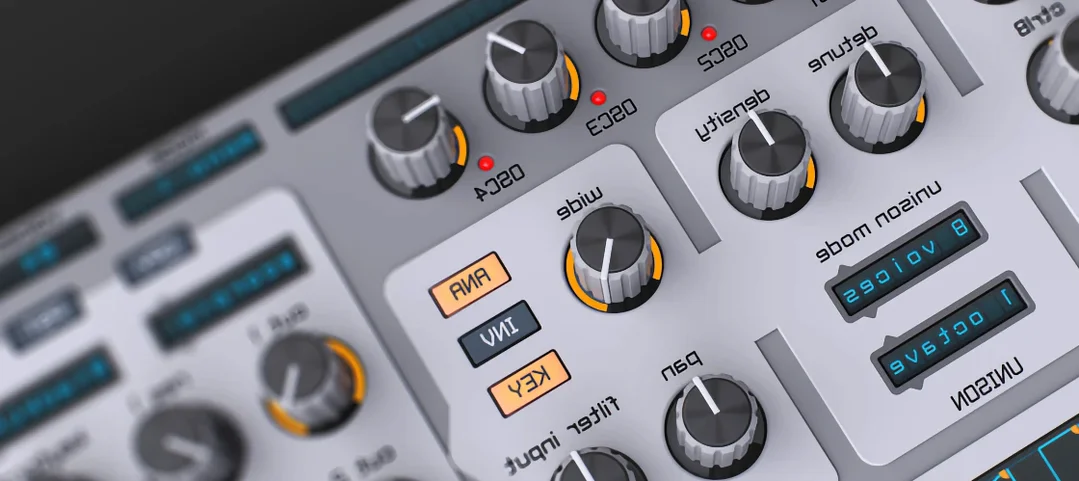
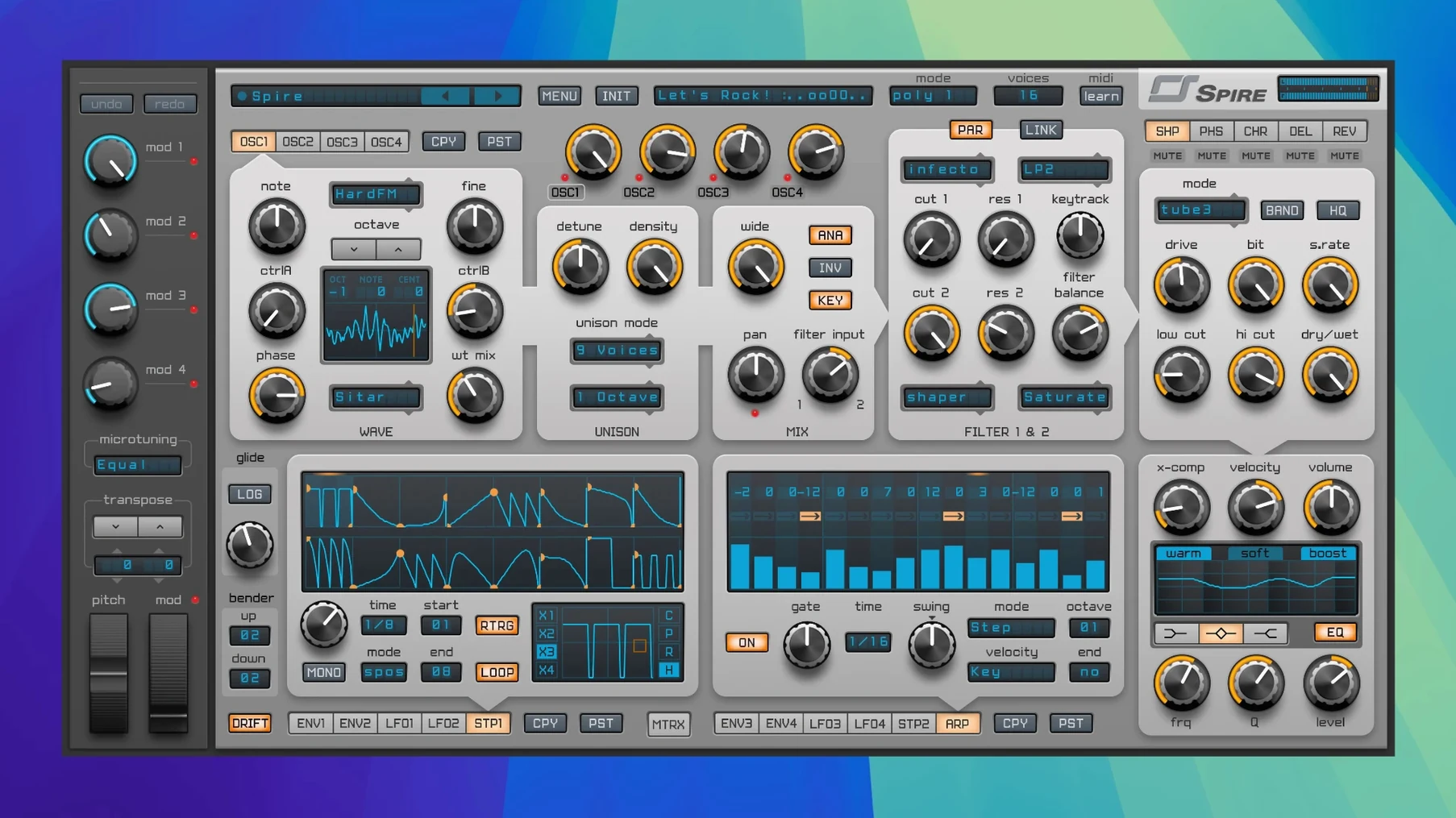
Build 5343 is the current release for Spire 1.5.19, and it keeps the plugin's footprint lean across AU, VST and AAX hosts on Intel and Apple Silicon Macs. That broad coverage matters more than most synth features: Spire drops into Logic, Ableton Live, FL Studio and Pro Tools without a wrapper, and the 1,500-plus presets stay organized across all of them.
Formats and hosts first
Spire runs on macOS 10.13 or newer and supports both Intel and Apple Silicon. The installer covers Audio Units, VST and AAX, which means one download serves Logic, Ableton, FL Studio, Cubase and Pro Tools. The single English interface keeps labelling consistent between hosts, so the modulation matrix, arpeggiator and step sequencer look the same wherever the plugin opens.
Clean, Modern Tone Built for EDM and Trance
Spire's character is clean and modern, which suits EDM, trance, house and dubstep. The multimode filter with 12/24 dB slopes and LP, HP, BP and notch modes handles most subtractive shaping, while the modulation matrix routes movement through the arpeggiator and step sequencer. Presets give a fast starting point, but the routing is where the synth earns its place in a session.
What Build 5343 changed in everyday use
Build 5343, dated 2025-09-22, didn't rewrite the synth, but it smoothed several friction points that interrupted flow. The most noticeable fix for daily work is the improved preset browser behaviour. Scrolling through the 1,500-plus patches no longer stalls when filtering by category, and the search field responds without the half-second lag that crept into earlier builds on Apple Silicon. That sounds minor until you're auditioning thirty leads in a row.
Host reporting also got tighter. Spire now identifies itself correctly to Logic Pro and Ableton Live on macOS Sequoia, so the plugin list doesn't show a generic "Audio Unit" label. That fix alone saved a few "where did my synth go" moments after system updates. Under the hood, the patch loading rewrite means recalling a complex multi-oscillator preset no longer causes a brief audio dropout — helpful when you're switching sounds mid-playback during a writing session.
The modulation matrix inherited a subtle but genuine improvement: right-click assignment of a modulator to a destination now sticks on the first try, without the occasional need to re-select. If you build templates that lean hard on the matrix, the cumulative effect over a day is fewer interrupted decisions.
A producer's 45-minute patch design session
Consider a sound designer working on a dubstep drop. The brief is a growl bass that morphs between two distinct timbres under automation. They start from an initialized patch — not a preset — because the modulation routing needs to be tight enough to control in the DAW later.
- Oscillator 1 loads a basic saw. Oscillator 2 gets a wavetable position swept by LFO 1. Oscillator 3 doubles Oscillator 1 an octave down for weight. Oscillator 4 stays off, reserved for a noise layer if the patch thins out in the mix.
- The multimode filter sits in 24 dB LP mode. An ADSR envelope opens the cutoff quickly and releases it slowly. A second envelope, mapped through the modulation matrix, pushes the wavetable position on Oscillator 2 forward as the note holds, so the timbre hardens over time.
- LFO 2, synced to 1/8 notes, modulates filter resonance in a narrow range for a rhythmic bite. The step sequencer gates the amplitude, cutting the sustained tail into a stutter pattern that follows the host tempo.
- Distortion and phaser are dialed in parallel. The phaser adds movement without washing out the low end. A short reverb, barely audible in solo, gives the patch a sense of space when played in context.
- The whole patch gets saved with a descriptive name. The designer maps the wavetable position and filter cutoff to two macro controls in the DAW, ready for automation lanes during the arrangement.
After the session, the patch lives in the user library, searchable from Spire's browser the next time a growl bass is needed. The entire process — init to mapped, automated patch — clocks under an hour because no menu hunting or host mismatch interrupts the flow. That's the kind of working speed Build 5343 was meant to protect.
- New — Build 5343 for version 1.5.19.
- macOS 10.13 or newer
- Intel or Apple Silicon Mac
- Interface language: English
Questions I get before install
Which plugin formats does Spire support on Mac?
Spire runs as an Audio Unit, VST and AAX plugin on macOS 10.13 or newer, with support for both Intel and Apple Silicon Macs.
Comments 0
Sign in to leave a comment.Sign inCreate an account
No comments yet. If a step is still there after you install it, say so.
More in VST Plugins
All in VST Plugins Sonic Academy KICK
Sculpts the transient, body, and sub layer of a kick drum independently.
21 steps saved
 Steinberg SpectraLayers Pro
Treats audio as a visual spectrum where every sound becomes a shape you can select and remove.
20 steps saved
 Strymon Plugin Bundle
Brings Strymon's delays, reverbs and modulation pedals into your DAW.
7 steps saved
 Slate Digital Submerge
Creates tempo-synced ducking and pumping without routing a sidechain compressor.
15 steps saved
 Slate Digital Storch Filter
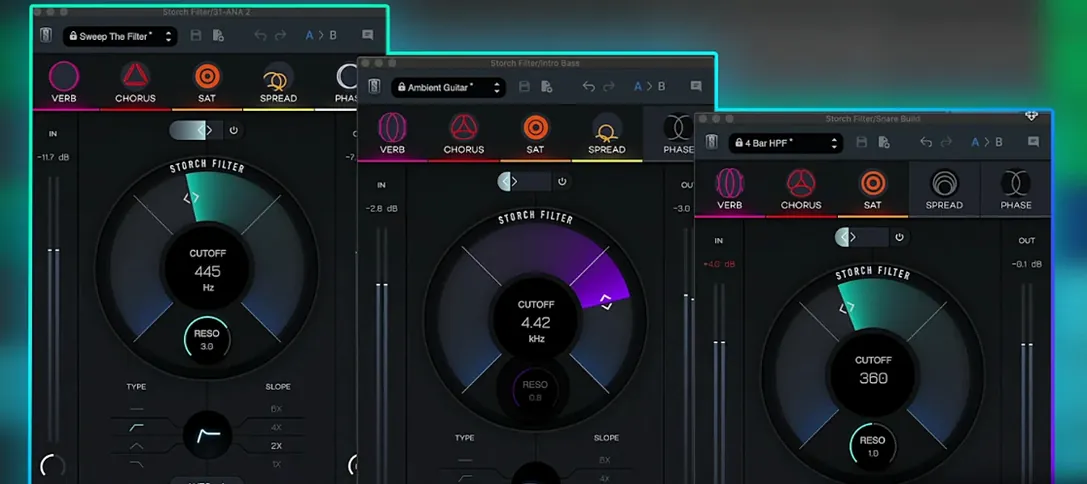
Sweeps a resonant analog-style filter with built-in drive and modulation.
8 steps saved
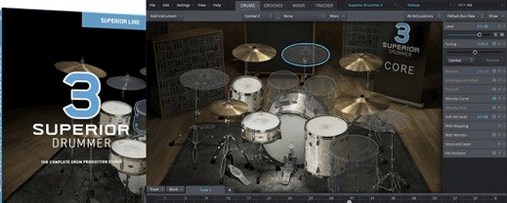 Superior Drummer
Gives you a 230 GB sample library of raw, unprocessed drum recordings inside any major DAW.
4 steps saved
 Slate Digital Murda Melodies
Pushes a melody through a wreckable chain of modulation, delay, and reverse effects.
17 steps saved
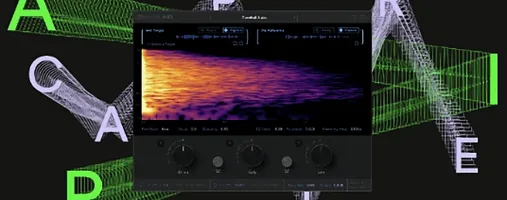 Supertone Air
Matches the acoustic fingerprint of a reference clip to dry dialogue in one pass.