
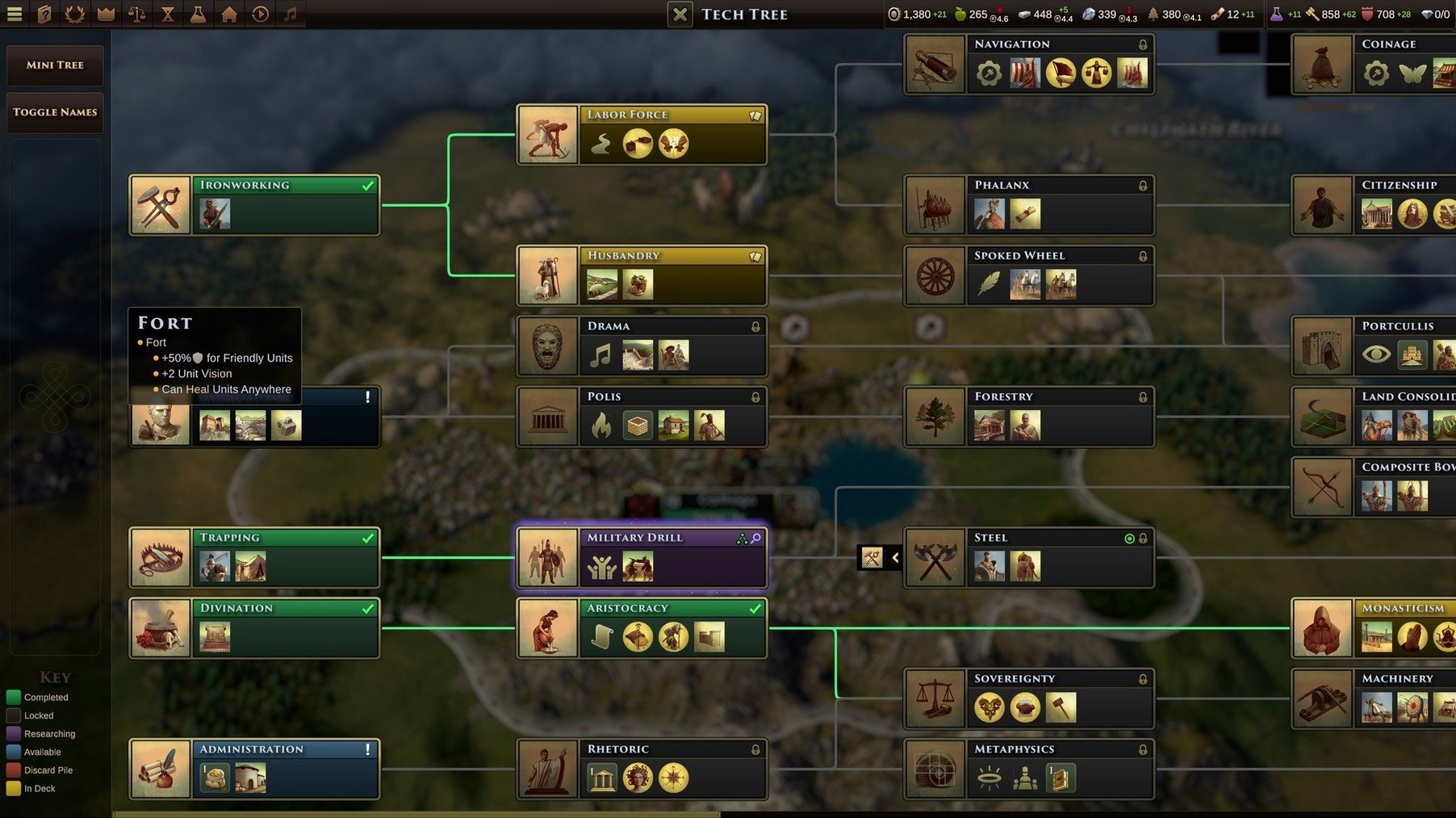
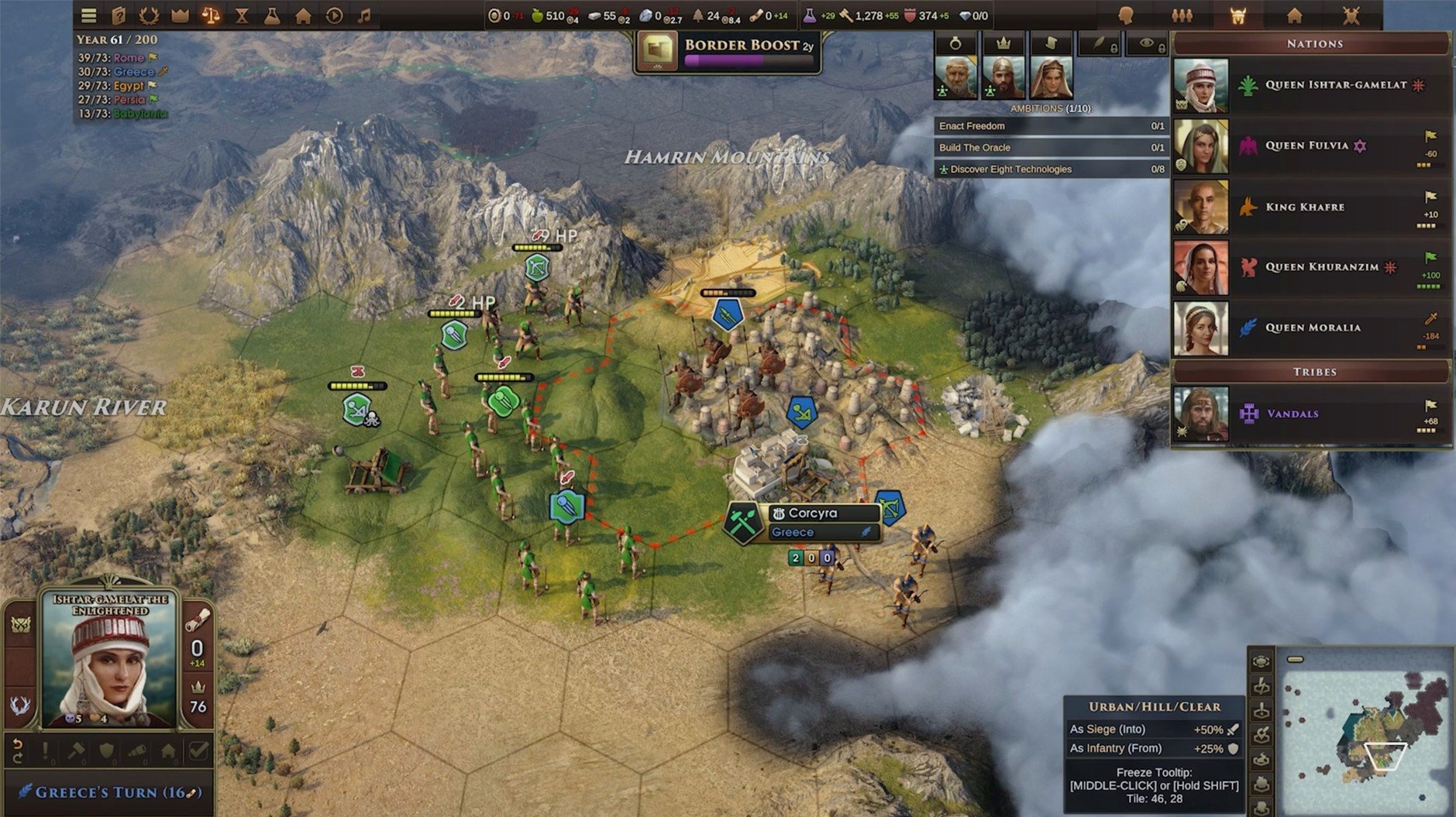
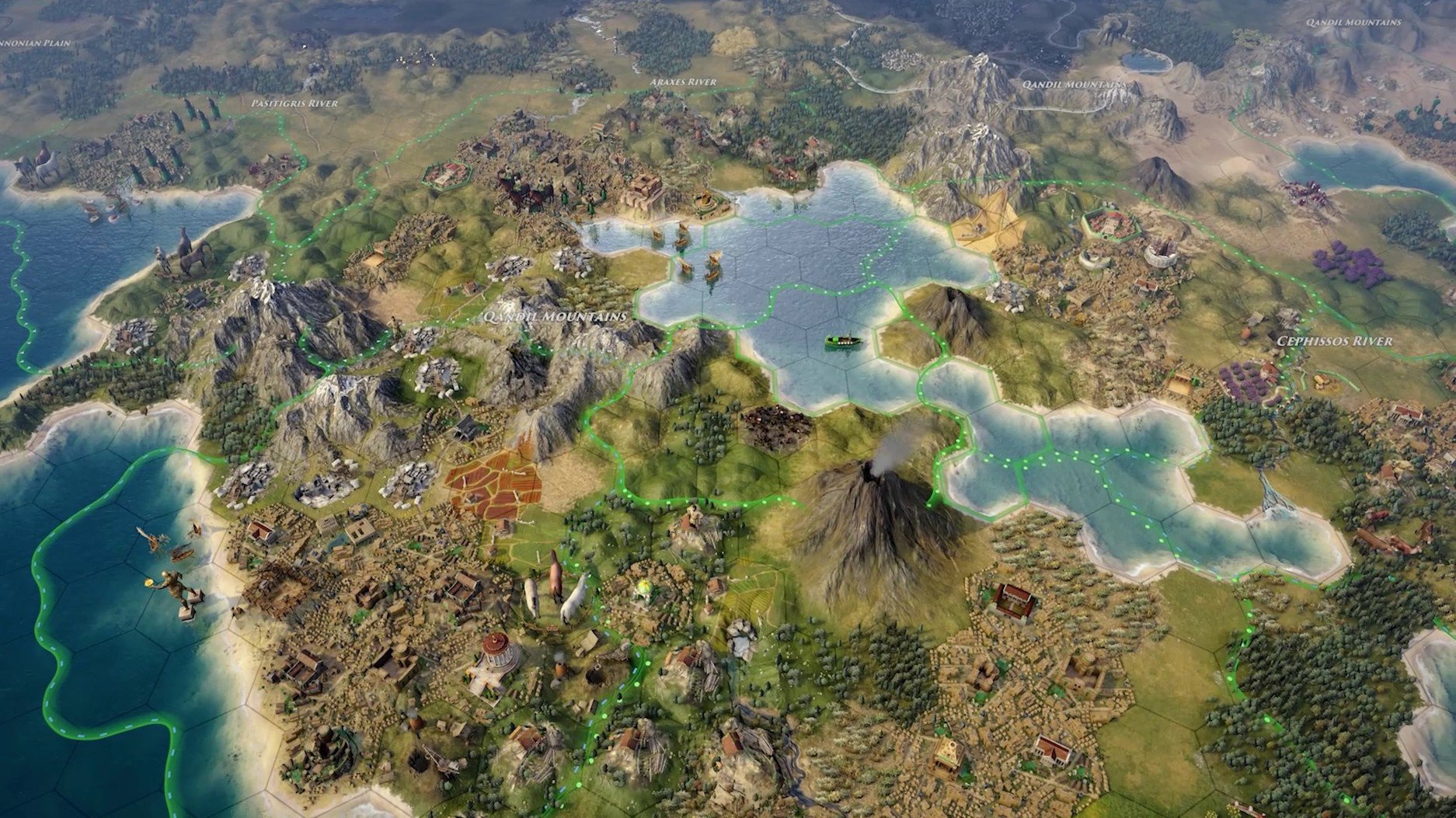
Old World is a historical strategy game that puts you in charge of a fledgling nation in classic antiquity, where your choices shape an empire across centuries.
Running an empire, one order at a time
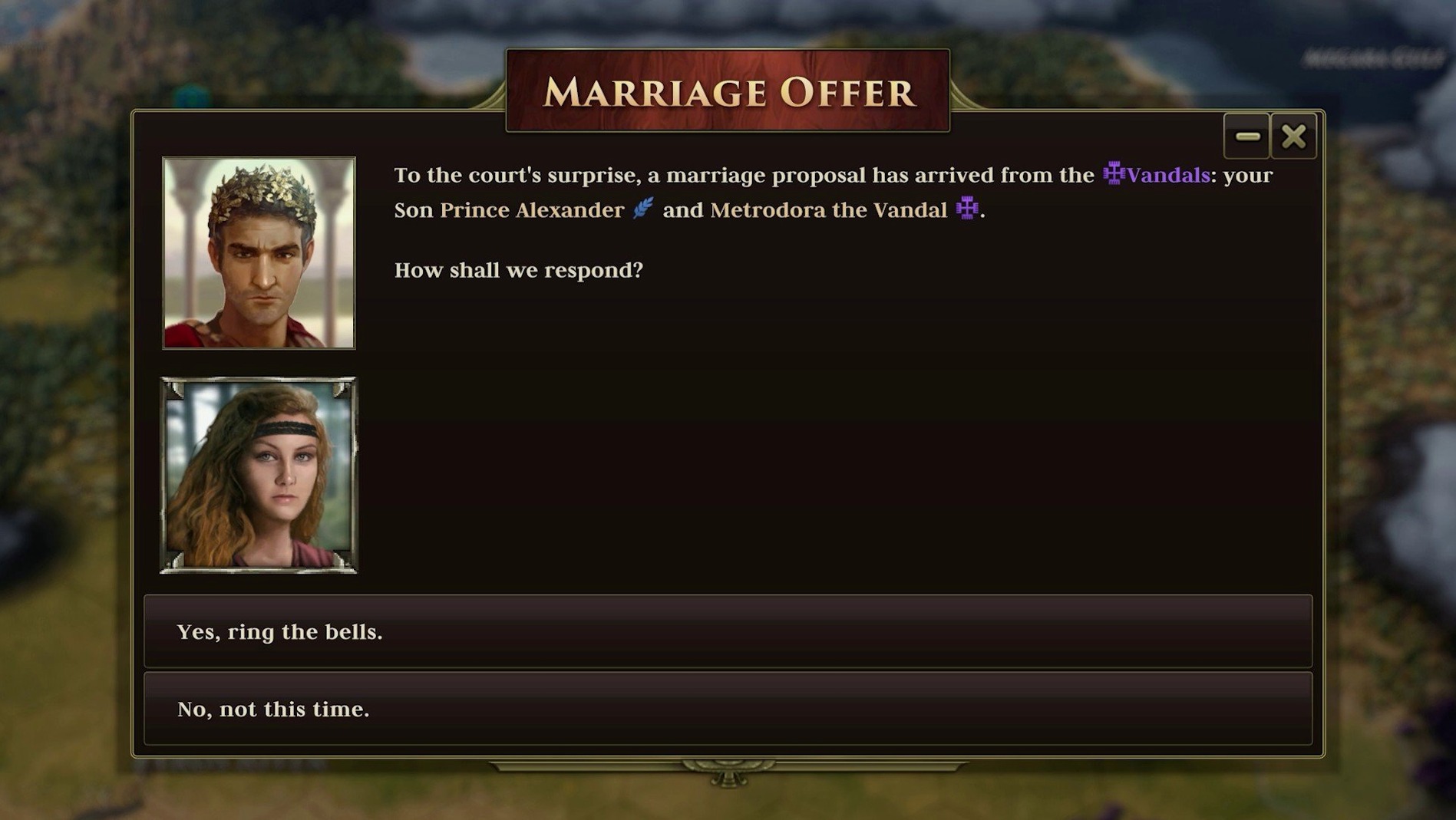
Each turn, you spend a finite pool of Orders to move armies, build improvements, or conduct diplomacy. The constraint forces hard decisions—you cannot do everything. You choose a ruler, marry into powerful families, and manage a court full of ambitious characters who age, plot, and die. More than 3,000 events drawn from history and myth interrupt your plans with dilemmas, scandals, and opportunities. New generations inherit the throne, bringing fresh traits that shift your nation's strengths. You balance city production, border skirmishes, and the moods of your nobles while the AI fields smarter compositions—fewer obsolete units, more strategic tension.
Scenarios, maps, and multiplayer
You can play through historical scenarios, tackle a weekly challenge on a curated map, or generate a random world with distinct terrain and resources. Hand-crafted maps offer scripted stories; random maps test your adaptability. Multiplayer works in hotseat, asynchronous, or cloud-play modes, so you and a friend can trade turns over days. The game tracks your dynasty's legacy, not just a victory screen, making each campaign feel like a chronicle of hard-won survival and messy inheritance.
Running out of Orders too fast—and the Wisdom fix
A few rough edges catch players early on.
- Orders starvation — You burn through your pool too quickly. Pump a ruler or heir with high Wisdom; it directly raises your Orders cap. Build roads between cities to cut movement costs, and resist the urge to scout with three units when one will do.
- Family micro-management overload — Discontent nobles and sudden deaths feel overwhelming. Open the family screen and set a tutor for each young heir immediately. That single click shapes their stats for decades and keeps your court productive without constant hand-holding.
- Marriage fog — The interface doesn’t always surface the best match. Filter by Diplomacy or Courage depending on your current weakness, then sort by age. A 16-year-old with modest stats often delivers more long-term value than a 40-year-old star who dies in five turns.
- Multiplayer sync drift — Asynchronous games sometimes stall. A manual refresh via the cloud-play menu resolves most hangs; if not, the host re-saves the session and re-invites the player—progress stays intact.
Babylon’s first turn on a random map
You launch a new campaign as Babylon on a randomly generated map. Turn one loads: a single settler, a warrior, and a ruler with the Charismatic trait. You spend your first Orders moving the warrior onto a hill to reveal three nearby city sites. The river delta looks best—bonus food and stone. You found the capital and queue a Militia unit.
By turn twelve, a neighbouring tribe offers a trade route. You accept, which costs an Order but unlocks a small science trickle. Your ruler marries a Greek noble with high Discipline; the alliance calms a restless family back home. Turn twenty brings an event: your queen accuses a general of hoarding grain. You side with the queen, losing the general’s loyalty but gaining legitimacy—a trade-off the narrative remembers.
Turn forty. Your ruler dies of illness. The heir, now 22, inherits a weak military and a treasury surplus. You shift production toward cavalry, swap the tutor to boost Courage, and spend three Orders repositioning your border scouts. By turn sixty, you have four cities, a functioning road network, and a simmering grudge with Persia. Each session ends not with conquest but with a story you want to continue tomorrow.
- Apple Silicon or Intel 64-bit Mac
Questions I get before install
What is the Orders system in Old World?
Orders are a core resource that limit how many actions you can take per turn, such as moving units, building, or conducting diplomacy.
Comments 0
Sign in to leave a comment.Sign inCreate an account
No comments yet. If a step is still there after you install it, say so.
More in Games
All in Games Updated
Nova Roma
Forces you to balance resource chains, civic needs, and public order in a single turn.
10 steps saved
 Oxygen Not Included
Makes you manage gas pressure and liquid runoff so your colony does not suffocate itself.
13 steps saved
 Updated
No Man’s Sky
Explores an endless galaxy, landing on planets without a loading screen.
4 steps saved
 No, I'm Not a Human
Forces a grim choice at your door by studying faces and stories.
12 steps saved
 Palworld
Automates resource gathering and crafting by assigning creatures to your base.
23 steps saved
 Updated
Paralives
Lets you build homes without a grid and steer characters through careers and relationships.
15 steps saved
 Updated
NBA 2K26 Arcade Edition
Delivers console-scale basketball with MyPLAYER and franchise modes.
9 steps saved
 PIGFACE
Takes on brutal contract kills in a fast, bloody first-person shooter.