
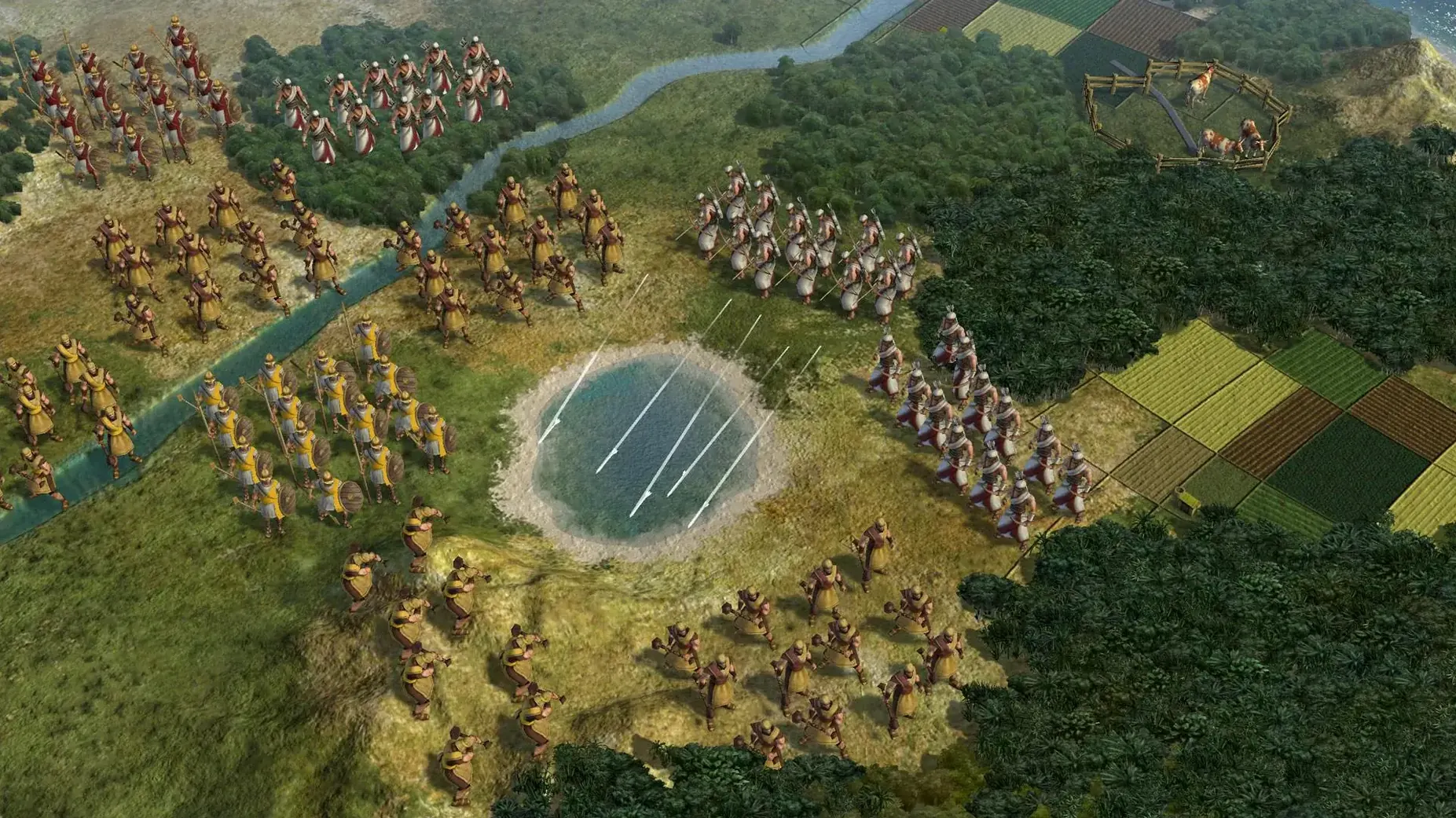
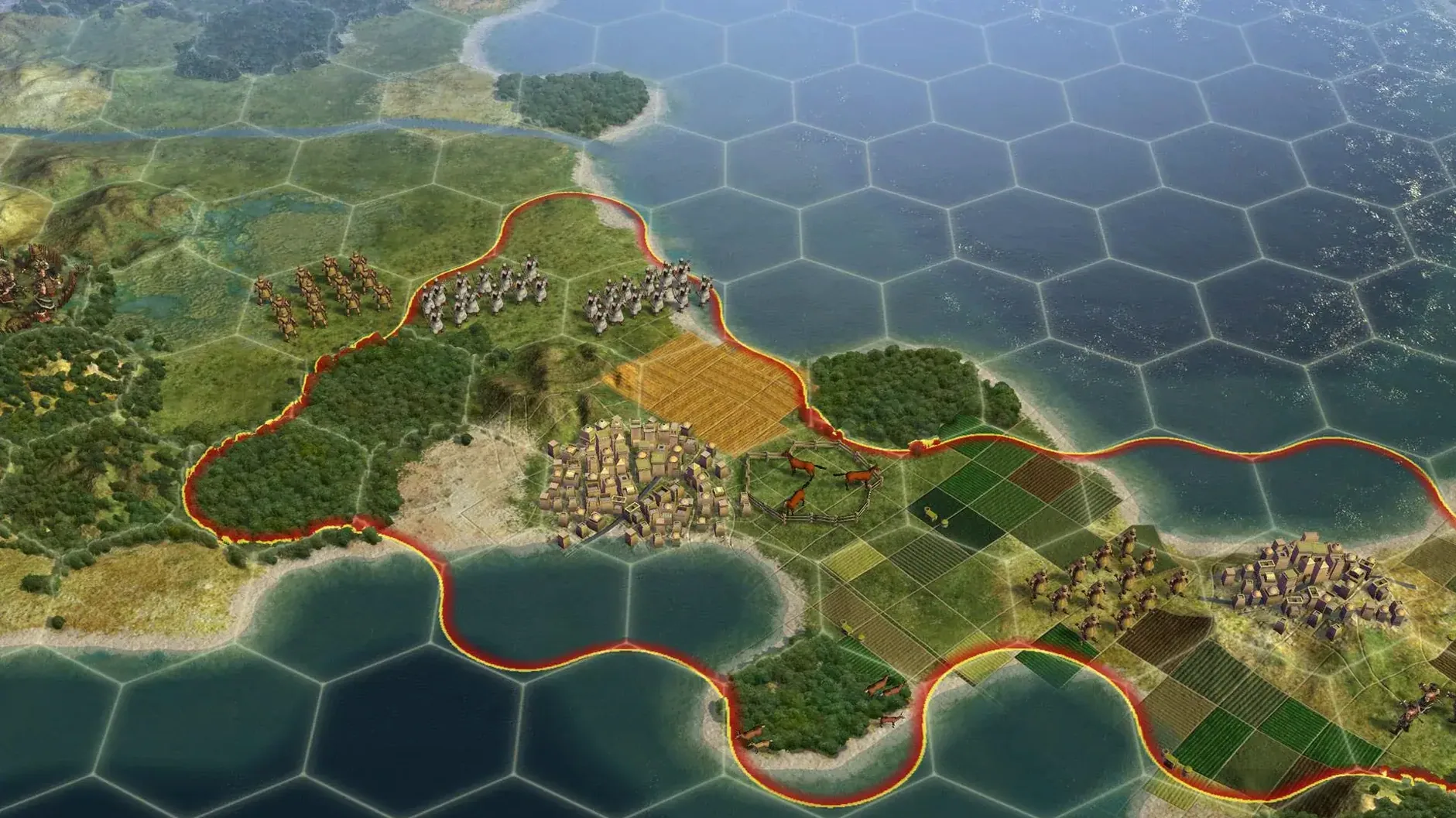
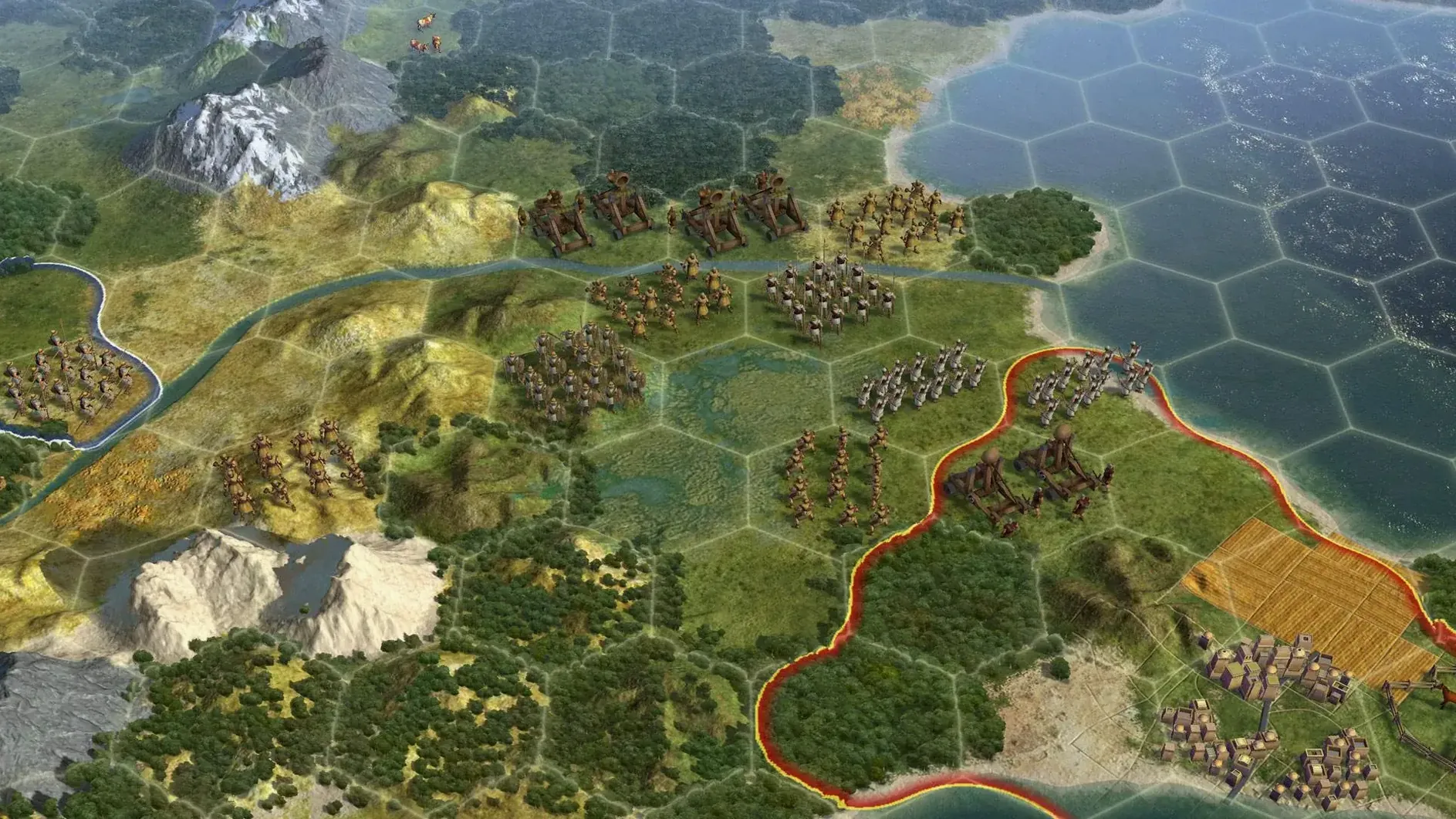

Hex-based city working with a three-tile radius changes how you think about borders. Civilization V pushes you to plan every expansion carefully, turning geography into a silent opponent. The game suits methodical players who enjoy reading the map and weighing long-term consequences, but it can frustrate those who prefer rapid, reactive play.
- You manage a network of cities that can be annexed, turned into puppet states, razed, or liberated depending on the circumstances.
- Puppet cities pay taxes and grant access to territory and resources, but you give up direct control over their production queue.
- Tactical depth comes from the rule that original capitals and player-founded cities cannot be razed unless recaptured from an enemy.
- Diplomacy allows you to liberate a destroyed civilization, bringing it back with its previous level of development as a loyal ally.
- The Aspyr Mac port delivers the full simulation without trimming core mechanics, tested on Apple Silicon through Intel translation.
This is a game of managed constraints. If you dislike dealing with semi-autonomous puppet economies or waiting through long AI turns, the pace will grate. For strategy players who treat a map like a puzzle, the interplay between annexation, liberation, and indirect rule keeps campaigns tense decades after your first settler founds a capital.
The Hex Grid That Rewrites City Placement
Civilization V versus earlier Civilization entries. The hex grid alone changes the feel. Civilization IV used square tiles; Civilization V's three-hex working radius makes city placement a tighter decision. Puppet states and liberation mechanics give wars a political layer that the previous game handled more bluntly.
Versus real-time strategy titles. A game like StarCraft II rewards speed and mechanical execution. Civilization V rewards patience, planning, and reading the map before committing. Turn-based play means you can step away mid-campaign without losing a battle to reaction time.
Versus grand strategy games. Europa Universalis IV covers trade, dynasties, and diplomacy at a continental scale, but it asks a lot before you understand what to do. Civilization V keeps the scope tighter: cities, units, culture, and war. The learning curve is shorter, and the feedback loop is clearer.
Rosetta 2 Performance on Apple Silicon
Does it run well on Apple Silicon? The build is Intel 64-bit, so it uses Rosetta 2. On a MacBook Air M1 with macOS Sonoma, the game opens and plays without extra configuration. Late-game turns still give the CPU something to chew on, but that has always been true of large Civilization campaigns.
Is Russian fully supported? The current build includes Russian text and voice acting, alongside English, German, and French. Interface language follows what the system or game settings request.
Can I play with friends on a Mac? Hot Seat and LAN multiplayer are available for both the Steam and Mac App Store versions. Hot Seat suits one Mac and two players; LAN play lets nearby machines join the same session.
Do all the expansion mechanics matter, or is the base game enough? The base game already has puppet states, liberation, city razing rules, and multi-layer warfare. Players often start with the core campaign before adding expansions, because the base systems are deep enough to carry a full game.
Puppet Cities Appeal to Hands-Off Rulers
Players who enjoy indirect control. Puppet cities do exactly what the name suggests: they pay taxes and open up territory, but you cannot set their build orders. If that trade-off sounds interesting rather than annoying, the game gives you a long runway of political decisions to explore.
Diplomatic strategists. Liberating a destroyed civilization and watching it return with its prior development is one of the more unusual tools in the series. It creates genuine allies out of former enemies and rewards players who think beyond simple conquest.
People who want a complete Mac strategy game without always-on connectivity. The single-player campaign needs no account or server connection once installed. That suits offline play, travel, or simply avoiding matchmaking when you want a quiet evening of empire building.
Learners of Russian, German, or French. Full text and voice support in four languages turns a strategy session into low-pressure language exposure. Unit descriptions, diplomacy screens, and advisor prompts all reinforce vocabulary in a context you already understand.
- New — Russian language support added to the interface.
- Improved — Build now labelled correctly as a multilingual release.
- macOS Sonoma
- Intel (64-bit); tested on Apple Silicon via Rosetta
- Interface languages: Russian, English, German, French
Questions I get before install
Can a destroyed civilization return to a match in Civilization V?
Yes. Liberating a destroyed civilization’s former cities can return it to the game with its previous level of development intact.
What control do I have over puppet cities?
Puppet cities pay taxes and grant territory access, but you cannot directly control their production. They operate semi-autonomously.
Which Mac architecture does the Aspyr port support?
The port requires a 64-bit Intel processor. It has been tested on Apple Silicon machines like the M1 MacBook Air via Rosetta translation.
Comments 0
Sign in to leave a comment.Sign inCreate an account
No comments yet. If a step is still there after you install it, say so.
More in Games
All in Games Chilla's Art The Caregiver
Builds slow-burn dread around mundane caregiving tasks in an isolated house.
10 steps saved
 Celeste
Turns a mountain climb into a series of precise, death-teaching platforming rooms.
12 steps saved
 Caves of Qud
Generates a deep, lethal world where permanent death raises the stakes of every mutation choice.
4 steps saved
 Cat Quest III
Sets an action RPG across an open archipelago you explore by ship and on foot.
20 steps saved
 Castle Crashers
Throws up to four players into a chaotic scramble of hacking, magic, and cartoon brawling.
4 steps saved
 Updated
Cast n Chill
Puts manual casting and reeling control at the centre of a laid-back fishing trip.
11 steps saved
 Car For Sale Simulator
Builds the full flipping loop around finding, repairing, washing, and selling used vehicles.
4 steps saved
 Command & Conquer: Generals
Pits three distinct factions against nine specialized AI commanders.